| Sign up for our free enewsletter! |
|
|
|
|
The ACNW Naturalist Internship
...how it all works
Internship Description Application Process Photo Gallery
|
This 9-month Naturalist Internship runs through the academic school year, beginning in September or January each year. This is more than just an internship; it is a training program designed to give you real professional experience, develop your knowledge and skills, and leave you better prepared for success as an environmental educator wherever you may go. The following is all part of that process:
|
Initial Training & Professional Development
In order to become familiar with the Audubon Center, the first 1-2 weeks of your Naturalist Internship will consist of training. You will attend training sessions during the day and some evenings to introduce you to the Audubon Center facility and history, specific class curricula and teaching techniques, and a myriad of other things that will prepare you for work and life at the Audubon Center. However, the training will not end here: ongoing training is part of this whole experience. Throughout the duration of your internship, our experienced staff will provide weekly, Friday afternoon training sessions on a variety of topics designed to fit your specific needs and interests, such as: First Aid/CPR, Group Management Techniques, Teaching English Language Learners, Debriefing Techniques, Teaching Students with Special Needs, and Working in a Multi-cultural Environment. We also take occasional off-site trips for training and “staff bonding” to Banning State Park, Jay Cooke State Park, Gooseberry Falls, Split Rock Lighthouse, The Wildcat Sanctuary (Sandstone), Hawk Ridge (Duluth), The Raptor Center (Minneapolis), other residential environmental learning centers (RELC’s) throughout Minnesota, and many other locations that our interns are interested in visiting.
Teaching
After the first two weeks of training, you will have the opportunity to transfer your newly acquired knowledge and skills into practice by teaching for our residential environmental education program. As a teacher, you will take students outside for a wide-variety of cultural history, natural history, and adventure classes. We teach students from Kindergarten through 12th grade, though most of our students are in middle school (ages 10-13). On a typical week, you will teach an average of eight, 3-hour long classes. You will also present one-hour long "Evening Programs" to large groups of students and adults, one evening a week. Be prepared for hands-on, experiential teaching and learning: you may find yourself in full costume, role-playing for our “Voyageurs” Evening Program, digging for worms for “Dirt, Rocks, and Worms” class, building a campfire for “Survival in the North Woods”, or cross-country skiing on Grindstone Lake!
Liaisoning
This internship provides you with countless opportunities to develop your public relations techniques, or “people skills”, which are vital in the field of environmental education. You will serve as a host or "liaison" for a variety of groups that come to stay at the Audubon Center, both during the week and on some weekends. As a liaison, you must prepare for the group's arrival, welcome them with a warm smile and positive attitude, assist with kitchen duties, serve as the primary Audubon Center representative, and provide the best customer service possible. The liaison also remains on emergency call throughout the nights while their group is in residence.
Curriculum Development
& Evaluation
As both a teacher and a student, it is important that you receive regular feedback from others. This allows you to demonstrate and develop the skills and knowledge that you are gaining through your Naturalist Internship experience. You will compile a teaching portfolio which includes 1) your own lesson plan, 2) lesson plan reviews and modifications, 3) weekly self evaluations, and 4) evaluations by Audubon Center staff and peers. All of these things will help you become an effective environmental educator. |
 |
Internship Focus Areas
Every intern that works with us brings along their own unique set of talents, skills, and interests, so we would like to tailor this experience to best fit you. Therefore, every intern is able to choose one focus area that they would like to concentrate on throughout their internship. The focus areas will provide you with insights into the work that takes place behind-the-scenes to make the Audubon Center a successful non-profit organization. While we are able to provide you with countless opportunities, it is your responsibility to take advantage of those opportunities and seek out ways to be personally challenged and inspired. The following focus areas are available:
- Wildlife Training & Rehabilitation Focus
Wildlife interns will gain the knowledge and experience needed to pursue a career with wildlife. As a wildlife intern you will be in the rotation for daily animal care, which will involve preparing food for birds of prey, caring for reptiles and amphibians including snakes, and general cleaning. You will also be responsible for daily care and training for one of our non-releasable raptors. You may also choose to participate in the wildlife rehabilitation program, learning the skills to provide emergency care to injured animals, including bandaging, fluids, and administering medication.
- Land Management and Facilities Focus
If working with your hands is your passion, you may assist with projects such as invasive species removal, building and grounds maintenance, construction projects, XC ski trail grooming, wood splitting, snow removal, maple syrup harvest and production, and much more. There are also opportunities to learn about certified forestry and renewable energy.
- Administration Focus
With an Administration focus you will learn about budgeting and the overall scope of running a residential environmental education center. You may assist with administrative tasks such as grant, newsletter and organization promotional writing, marketing, development of brochures, flyers and power point presentations, technological and computer support, and much more.
- Adventure Programming Focus
With an Adventure Programming focus, you will learn about trip planning and will have opportunities to assist with community college adventure programs such as Backpacking, Winter Camping, Intro. to River Canoeing, Wilderness Navigation, and Outdoor Sampler. You will help develop new adventure programs and activities, assist with inspection and maintenance of adventure courses, repair and organize adventure equipment and storage facilities, help with ordering of adventure equipment, and inspect, stock and order First Aid supplies.
- Curriculum Development Focus
If you choose a Curriculum Development focus, you will become well-versed in lesson plan formatting and writing. You will work with the Science and Curriculum Coordinator to update and improve current Audubon RELC lessons, along with creating new lessons. This focus will also allow you to develop indirect education displays around the Audubon Center. These displays might introduce topics, such as phenology, renewable energy, benefits of local and organic food, endangered or threatened species, etc. Other opportunities include attending environmental education conferences, managing class inventory, and providing mini trainings for the other interns on topics related to education and teaching.
Other Benefits
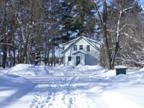 |
Room and Board: All of our interns live in the Staff House, a rustic farmhouse on the shores of Grindstone Lake. You will receive your own private bedroom and share a communal kitchen, dining room, living area, laundry, and 3 bathrooms with up to 5 other interns. Nearly all meals are provided, though there may be occasional meals you must purchase on your own. This is a wonderful opportunity to take part in a close-knit community, and meet people from all over the world that share your interests. The Audubon Center is unique in having many international interns, which makes the Naturalist Internship here a global learning experience for all involved. |
Stipend and Other Perks: To assist with living expenses, you will receive a stipend of $320 per month. Additionally, Internet access, a shared Intern car, staff gear discounts, and use of the Audubon Center’s recreational equipment (climbing wall, canoes, tents, bicycles, etc.) is available for you to use.
Graduate Classes: As a Naturalist Intern, you will be eligible to take graduate courses from Hamline University, St. Paul, towards a 10-credit, Environmental Education Certificate. This is a way to actually earn graduate credit for your work as an intern. The Audubon Center will pay for 1 credit for every month you work. Additional courses can be purchased or audited (taken for free without credit). All courses take place on the ACNW field campus, with all transportation provided. A sample of the courses available are:
- Environmental Education Basics (required for EE Certificate)
- Advanced Teaching Methods (required for EE Certificate)
- Spring Flora of Minnesota (weekend field course)
- Winter Ecology (weekend field course)
- Woodland Indian Crafts (weekend field course)
- Reading the Landscape (weekend field course)
- Minnesota Forest Ecology (weekend field course)
- Phenology (online course)
Our
Mission:
To
protect, improve and promote the enjoyment of the
natural environment
through formal and informal
education programs and research; to assist
and
encourage
environmental education programs, centers, and
careers. |
Our
Vision:
The
environment is the blackboard for the Center's educational programs;
the common ground that brings us together with the natural world and
people from around the globe to share our concerns for one another and
the future. It is through positive and shared experience that we hope
we can affect the values and actions of our people to create a world
of harmonious diversity. |
|